
Trichophytic closure is a type of scar closure that is used in conjunction to a hair restoration. For many years, trichophytic closure has been used for scalp surgeries allowing hair to grow into the scar, improving the appearance. When hair is introduced into the scalp scar, it helps reduce the contrast of the scar and the hair area. Trichophytic closure can be done on the upper edge, lower edge, and double edge of the scar.
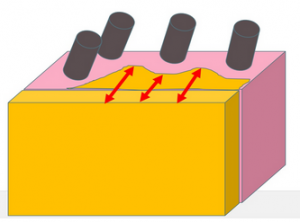 Scar tissue and the transection of the lower portion of hair follicles, on the edge of the scar, are what cause the lack of hair in the scar. Partial trichophytic closure, recently introduced by Dr. Parsa Mohebi, requires the hair transplant surgeon to observe the donor wound edges and calculate the width of the edge that needs to be removed at any area. The surgeon will use magnifying loupes in order to carefully observe the edges of the wound, making sure that there is no transection in the hair follicles.
Partial trichophytic closure assures that hair will grow into the scar from the upper edge in order to minimize the contrast between the scar and the surrounding hair areas. With this method the visibility of the donor scar is minimized drastically if done properly.
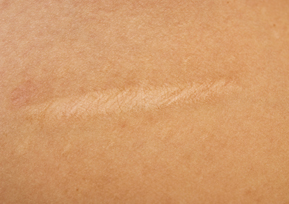 Scars start off by appearing red in color, which is when the blood vessels are inflamed and damaged. This part is known as hyper pigmented scars. Once a scar matures, the skin pigment will be lost and the color will change to white, which is known as hypo pigmented. Scars take approximately six to twelve months to completely heal and become white. The size, shape, and depth of the scar are all factors that contribute to how the scar will look after completely healing. In order to prevent darker scarring and infection, it is important to always keep the scar area clean and moist, during the healing process.